Understanding IBS: A Closer Look at the Symptoms, Causes, and Treatment Options
 DAMIAN POUSTIE Poustie

Get a closer look at Irritable Bowel Syndrome (IBS) and how to treat it.
Are you tired of dealing with the constant discomfort and distress that come with Irritable Bowel Syndrome (IBS)? You're not alone. Millions of people struggle with this condition that affects the large intestine and causes abdominal pain, cramping, bloating, constipation, and diarrhoea.
IBS is triggered by changes in diet and stress and can be a chronic and difficult condition to manage.
But there is hope. The right care and treatment can make a significant difference. People with IBS can regain control of their lives and lessen the effects of their symptoms by making changes to their diet, learning how to deal with stress, taking medicine, and going to therapy.
Say goodbye to the emotional distress, anxiety, and depression caused by IBS and hello to a brighter future with manageable symptoms.
Let’s discover more about IBS, so make informed and scientific changes that will have a real impact on your IBS.
IBS
Irritable bowel syndrome (IBS) is a condition that affects the large intestine. People with IBS may experience abdominal pain, cramping, bloating, constipation, and diarrhoea. Symptoms often occur after eating, with changes in diet often triggering or worsening symptoms. IBS is a chronic condition, which means that it can last for a long time or even a lifetime

What are the symptoms of IBS?
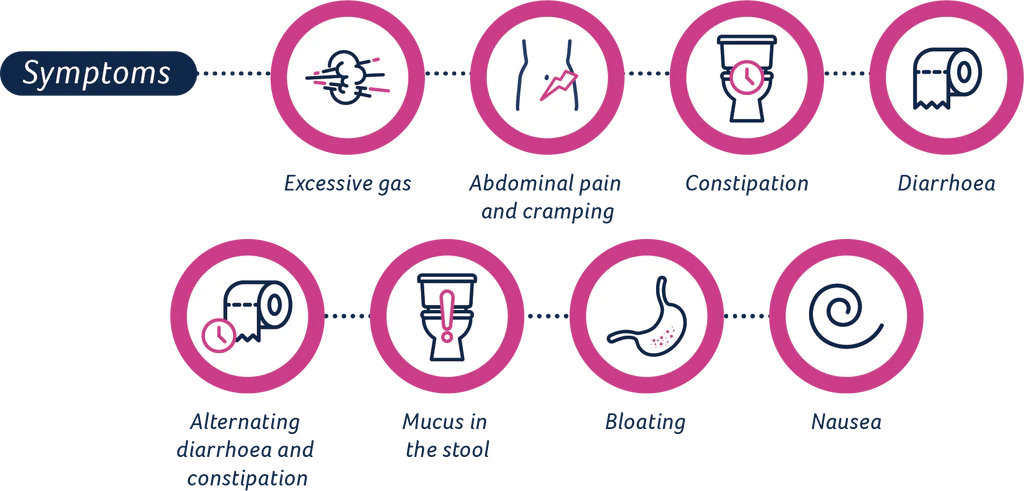
The most common symptoms of IBS are
abdominal pain
Bloating
Gas
Diarrhea
constipation
These symptoms may vary in severity and frequency from person to person.
IBS is classified into different subtypes based on the predominant symptom. For example:
IBS-D (diarrhea-predominant) is characterized by abdominal pain and frequent loose stools; IBS-C (constipation-predominant) is characterized by abdominal pain and infrequent hard stools; and IBS-M (mixed) is characterized by alternating periods of diarrhea and constipation.
Some people with IBS may also experience other symptoms, such as the urge to have a bowel movement, mucus in the stool, and the feeling that the bowel movement is incomplete.
According to the Rome IV criteria, for a diagnosis of IBS, a person must have had recurrent abdominal pain or discomfort at least 1 day per week in the last 3 months, associated with two or more of the following: related to defecation, associated with a change in frequency of stools, or associated with a change in form (appearance) of stools.
It is important to note that while these symptoms are common in IBS, they can also be caused by other conditions such as inflammatory bowel disease (IBD) or celiac disease. Therefore, it is important to consult with a healthcare professional for a proper diagnosis and treatment.
TAKE NOTE:
People with IBS (Irritable Bowel Syndrome) often have a mix of symptoms, such as pain or discomfort in the abdomen, bloating, gas, diarrhoea, and constipation. These symptoms can be different for each person and can be accompanied by changes in the way a person goes to the bathroom. People with IBS may only feel uncomfortable sometimes, while others may have severe symptoms that make it hard to go about their daily lives.
People with IBS may also have problems that aren't related to their digestive system, such as fibromyalgia, chronic pelvic pain, interstitial cystitis, chronic fatigue syndrome, headaches, depression, and anxiety.

Studies have shown that up to 50% of individuals with IBS also have fibromyalgia, and up to 30% have chronic pelvic pain. People with IBS may also have other health problems, like trouble sleeping, headaches, or emotional stress.
People with IBS may also have a lower quality of life because they have trouble doing everyday things like working, socialising, and being physically active. People with IBS may also be more likely to have other health problems, like anxiety, depression, or other mood disorders.
Possible causes of IBS
While we do not know for sure what causes IBS, it is a multifactorial disorder that likely involves an interaction between the GI tract, bacteria in the gut, the nervous system, and external factors such as stress.
Although not proven, theories exist as to factors that influence IBS symptoms, including:
neurological hyper-sensitivity within the GI (enteric) nerves
physical and/or emotional stress
dietary issues such as food allergies or sensitivities, or poor eating patterns
use of systemic antibiotics for GI infection
bile acid malabsorption
the amount or pattern of physical exercise
chronic alcohol abuse
abnormalities in GI secretions and/or digestive muscle contractions (peristalsis)
acute infection or inflammation of the intestine (enteritis), such as traveller’s diarrhea, which may precede onset of IBS symptoms
The GI system is very sensitive to adrenalin and other hormones. Adrenalin is the hormone that is released when someone is excited, scared, or anxious.
The GI tract is also affected by changes in female hormone levels, so IBS symptoms may get worse at certain times during the menstrual cycle. Since these hormones can change how long it takes for food to move through the digestive tract, this could be why IBS is more common in women, even though there isn't much direct evidence yet.

How is IBS diagnosed?
IBS is usually diagnosed by a doctor based on the symptoms. The most common symptom is abdominal pain, which is often relieved by bowel movements.
A stool sample may be taken to rule out other causes of these symptoms, such as inflammatory bowel disease.
Blood tests may also be done to check for anemia or other problems.
If there is no clear cause for the symptoms, the doctor may diagnose IBS based on the type of symptoms (diarrhea-predominant, constipation-predominant, or alternating between diarrhoea and constipation).
Diagnosing IBS: What You Need to Know
As the symptoms of IBS are varied and there are no specific physical tests to determine whether an individual has IBS, part of the diagnostic process is to rule out other diseases. Typically, your physician will go through several steps to reach an IBS diagnosis.
Medical History
Your doctor will look at your medical history, including how your bowels work, how and when your symptoms started, whether you have other symptoms or not, and any warning signs that might point to a different diagnosis. It is important to note what symptoms do not relate to IBS, which include weight loss, blood in the stool, and fever. If the need to defecate wakes you from your sleep, you should report this to your physician, as it is not typical of IBS and could have other implications.
It can be hard to tell the difference between bowel pain and pain in the uterus or ovaries. If a woman also has a gynaecological condition, this could delay or make it harder to figure out if she has IBS.
Physical Examination
During a physical exam, the bowel may have jerky, uncontrollable muscle contractions (spasticity) and feel tender, even though the bowel's health looks normal in most other ways.
Investigative Testing
A physician might request tests to rule out other diseases. During a scope, doctors look at the intestines with a tool that goes in through the mouth (gastroscopy) or the nose (colonoscopy/sigmoidoscopy). The scope is a hollow, flexible tube with a tiny light and video camera.
A doctor may also ask for routine blood and stool tests to rule out diseases that are already known to be organic. Some symptoms of celiac disease overlap those of IBS, so a family history of this disease might be a reason to test for it.
Who is at risk for IBS?
Anyone can develop irritable bowel syndrome (IBS), but certain groups of people are at a higher risk. These include:
Women: Women are more likely to develop IBS than men. This may be due to hormonal changes and the fact that women are more likely to seek medical help for their symptoms.
People with a family history of IBS: If a close relative has IBS, you may be at a higher risk of developing the condition.
People with other gastrointestinal conditions: Individuals with other gastrointestinal conditions such as inflammatory bowel disease (IBD) or celiac disease may be at a higher risk of developing IBS.
People with mental health conditions: Individuals with mental health conditions such as anxiety or depression may be at a higher risk of developing IBS.
People who have had a gastrointestinal infection: Individuals who have had a gastrointestinal infection, such as food poisoning, may be at a higher risk of developing IBS.
People who have had a stressful event: Individuals who have experienced a stressful event, such as a death in the family or a major life change, may be at a higher risk of developing IBS.
It's important to note that anyone can develop IBS, even if they don't fall into these risk groups. If you are experiencing symptoms of IBS, it's important to see a healthcare professional for a proper diagnosis and treatment plan.
Complications of Irritable Bowel Syndrome (IBS)

IBS can lead to a number of problems, such as diarrhoea, constipation, or diarrhoea and constipation that come and go. These symptoms can be very uncomfortable and can lead to other problems, such as dehydration, malnutrition, and weight loss. In severe cases, IBS can also cause rectal bleeding.
Dehydration: Diarrhoea can cause dehydration, which can lead to other health problems if not treated.
Malnutrition: Avoiding certain foods due to IBS symptoms can lead to malnutrition, particularly if the diet is not properly balanced.
Depression and anxiety: IBS symptoms can lead to emotional distress, depression and anxiety, which can negatively impact overall health.
Sleep disturbances: IBS symptoms such as abdominal pain and cramping can disrupt sleep, leading to fatigue and decreased productivity.
Work or school absenteeism: IBS symptoms can make it difficult for individuals to focus and can negatively impact productivity at work or school, leading to absenteeism.
Reduced quality of life: IBS symptoms can greatly impact an individual's quality of life, and make it difficult to participate in social activities, leading to social isolation.
Comorbidities: IBS can also be associated with other gastrointestinal disorders and extraintestinal symptoms such as fibromyalgia, chronic fatigue, and headaches.
Keep in mind
Living with irritable bowel syndrome (IBS) can be a daily struggle; it can rob you of your ability to live life to the fullest. The constant physical discomfort, anxiety, and isolation it can cause can be debilitating.
But it doesn't have to be this way; you deserve to live a life free from the grip of IBS.
It's important to know that IBS is a complicated condition that needs to be treated in the right way to avoid long-term health problems.
Leaving IBS untreated can lead to a reduced quality of life where everyday activities become a struggle and joy is replaced by discomfort. It can cause physical discomfort and also affect mental health and emotional well-being. It can lead to social isolation, as the fear of having an IBS attack in public can make it difficult for individuals to participate in social activities. It can also make it difficult for individuals to focus, which negatively impacts productivity at work or school.
Ignoring IBS can also lead to nutritional deficiencies. Making drastic dietary changes or avoiding certain foods can lead to nutrient deficiencies, which can have serious health consequences. This is a common mistake that we see when people try to treat their own IBS at home without the guidance of an IBS expert such as Maddie Lawson, a dietician and nutritionist at the IBS clinic at The Health Collective.

Self-diagnosis and not going to a doctor can delay the right diagnosis and treatment of IBS, which can make symptoms last longer and make the condition harder to deal with in the long run. Also, not addressing underlying psychological issues or not taking a holistic approach can make symptoms worse and harder to manage.
It's important for individuals with IBS to understand that they are not alone in this struggle and that help is available. You can take control of your IBS and get your life back by working closely with doctors to come up with a good treatment plan, dealing with any underlying psychological problems, and making changes to your lifestyle that can help relieve symptoms.
Don't let IBS control your life; take the first step towards a brighter future and start living the life you deserve. With the right care and treatment, you can find relief from the symptoms of IBS and finally put an end to the constant discomfort, anxiety, and isolation.
Conclusion
Living with irritable bowel syndrome (IBS) can be a difficult and challenging experience, but you're not alone. At the health collective, we understand the impact IBS can have on your daily life, which is why we're here to help. We have a highly qualified dietitian who is dedicated to helping you manage your symptoms and achieve optimal health.
Our dietitian will work with you to make a plan for IBS relief that is specific to your needs and goals. Whether it's improving your gut health, managing symptoms, or simply eating for overall wellness, our dietitian will help you every step of the way.
At our clinic, we're committed to providing you with the best possible care, and we believe that starts with a proper diagnosis. So if you're struggling with IBS, don't hesitate to book an appointment today.

Our team is here to support you and help you feel your best.
The Health Collective's IBS clinic, led by Maddie Lawson, is staffed by a team of skilled health professionals who provide comprehensive, individualized care through an integrative approach. This approach combines the best of conventional and complementary medicine, taking into account the whole person (body and mind) and utilizing evidence-based treatments. The clinic places a strong emphasis on preventive health.
Read more about Part 2 of our IBS series, where we'll dive into the strategies for overcoming IBS through diet, management, and prevention. Don't miss out on the valuable information and insights to help you manage your symptoms and improve your gut health
CLAIM YOUR $50 VOUCHER AT THE HEALTH COLLECTIVE
Fill out the form below
For New patients to The Health Collective only.
One voucher per person for select services including Chinese Medicine, Acupuncture, Dietetics, Nutrition, Massage.

